Navigating the Future of SEO: Trends and Predictions for Sustainable Success
Navigating the Future of SEO As the advanced scene proceeds to advance at a fast pace, Look Motor Optimization (SEO) remains a foundation technique for businesses looking to upgrade their online perceivability, draw in qualified activity, and drive economical development. In this comprehensive investigation, we dive into the rising patterns and expectations forming the long run of SEO, offering insights and methodologies to assist businesses remain ahead of the curve and flourish within the energetic computerized environment. The advanced scene could be an always advancing biological system, and look at motor optimization (SEO) sits at the heart of its ever-changing streams. Fair some a long time prior, watchword stuffing and fundamental backlink building were sufficient to secure a best spot in look. Nowadays, look motors like Google prioritize client involvement, semantic pertinence, and a center on high-quality substance. For businesses and websites to flourish in this energetic environment, understanding and adjusting to developing SEO patterns is pivotal. This article digs into the long haul of SEO, investigating key patterns and forecasts that will clear the way for maintainable victory. 1. The Rise of AI and Machine Learning Counterfeit insights (AI) and machine learning (ML) are quickly transforming the SEO scene. Look motors are leveraging these innovations to pick up a more profound understanding of client expectation and look questions. This implies essentially centering on watchwords will now not be adequate. Here’s how AI and ML will affect SEO: 2. The Voice Look Transformation Voice look is quickly getting to be a favored strategy for data recovery. As virtual colleagues like Siri and Alexa pick up unmistakable quality, optimizing for voice inquiries gets to be vital. Here’s what to consider: 3. The Proceeded Significance of High-Quality Content Substance remains the ruler in SEO, but the definition of “high-quality” is continually advancing. Here’s what matters most: 4. Prioritizing Mobile-First Ordering Google has moved to mobile-first ordering, meaning the portable adaptation of your site is the essential form utilized for positioning. Here’s what this implies for your SEO technique: 5. The Advancing Scene of Neighborhood SEO For nearby businesses, optimizing for neighborhood look remains significant. Here’s how to remain ahead of the bend: 6. Accentuation on Client Involvement Within the journey to convey more significant and important look comes about, look motors are putting expanding accentuation on client experience metrics. Components such as page stack speed, versatile responsiveness, and in general convenience are getting to be basic positioning signals, affecting look motor rankings and perceivability. To succeed within the future of SEO, businesses must prioritize client encounter optimization, guaranteeing that their websites are quick, instinctive, and user-friendly over all gadgets and stages. 7. Rise of Visual Look Visual search is balanced to revolutionize the way clients find and connect with substance online. Fueled by progressions in picture acknowledgment innovation and AI calculations, visual look permits clients to explore for data utilizing pictures instead of content. As visual look appropriation proceeds to develop, businesses must optimize their visual substance, counting pictures, recordings, and infographics, to improve perceivability in visual look comes about and capitalize on this developing slant. 8. Voice Look Optimization The expansion of voice-enabled gadgets and virtual colleagues has impelled voice search into the standard, showing modern openings and challenges for SEO experts. Voice look inquiries tend to be longer and more conversational than conventional text-based questions, requiring businesses to optimize their substance for natural language and long-tail watchwords. Moreover, optimizing for neighborhood look and leveraging organized information markup can make strides perceivability in voice look comes about, making a different business interface with clients within the minutes that matter most. 9. AI-Powered SEO Instruments and Automation Manufactured Insights (AI) and Machine Learning (ML) innovations are changing the way SEO errands are performed, empowering computerization, information investigation, and prescient experiences at scale. AI-powered SEO devices can robotize schedule errands such as watchword inquire about, substance optimization, and specialized reviews, liberating up time for SEO experts to center on vital activities and imaginative problem-solving. As AI proceeds to progress, businesses can expect to see more prominent integration of AI-driven highlights and capabilities in SEO stages and apparatuses. 10. E-A-T and Expertise-Driven Substance Ability, Authoritativeness, and Reliability (E-A-T) have developed as key contemplations in look motor rankings, especially for websites in touchy or high-stakes businesses such as healthcare, fund, and legitimate administrations. To set up credibility and authority in their particular specialties, businesses must prioritize the creation of high-quality, expert-driven substance that gives important insights, demonstrates skill, and wins the belief of both clients and look motors. Also, fostering positive surveys, tributes, and supports can advance upgrade E-A-T signals and support look perceivability. 11. Mobile-First Ordering and Optimization With the lion’s share of online searches now conducted on versatile gadgets, Google has transitioned to mobile-first ordering, prioritizing the versatile form of websites for ordering and positioning purposes. Businesses must guarantee that their websites are optimized for versatile gadgets, with responsive plans, quick stack times, and natural routes. Mobile-friendly substance designs such as AMP (Quickened Versatile Pages) and PWA (Dynamic Web Apps) can assist improve versatile client experience and make strides look rankings within the mobile-first period. 12. Hyperlocal and Geo-Targeted SEO As shoppers increasingly rely on versatile gadgets to discover neighborhood businesses and administrations, hyperlocal and geo-targeted SEO techniques are getting to be fundamental for businesses with physical areas or territorial target markets. Optimizing for neighborhood look, making location-specific landing pages, and leveraging Google My Trade (GMB) profiles can offer assistance businesses progress, perceivability in neighborhood look comes about and attracts nearby clients. Also, neighborhood citations, audits, and local link building can reinforce nearby SEO signals and establish noticeable quality in nearby look environments. 13. Semantic Search and Common Dialect Handling Semantic look, fueled by Characteristic Dialect Preparing (NLP) technology, is reshaping the way look motors translate and get client inquiries. Instead of depending exclusively on catchphrases, semantic look calculations analyze the context, intent, and semantics of look questions to convey more importance and exactness. Businesses can optimize for semantic look by making
Role of social Media calendar

HOW EFFECTIVLEY IT WORKS Role of Social Media calendar The Maestro of Engagement: Unleashing the Potential of a Social Media Calendar Managing a social network account—or numerous accounts—is no easy task. Between fresh posts, audience interactions, and internal company amplification, you’re probably juggling several job streams just to keep your social media accounts active. Fortunately, there is a better approach. An editorial calendar for social media can be compared to a cheat sheet. It allows you to schedule posts in advance, resulting in a seemingly simple stream of high-quality material. A social media content calendar, whether planned 30 days or 365 days in advance, is an excellent method to provide your audience with consistent messaging and high-quality material. Imagine juggling flaming batons on a unicycle while writing a viral symphony – that’s the same as managing social media without a calendar. Staying structured and strategic is critical in the dynamic world of social media marketing, where material requires regular flow and audiences desire timely involvement. And the social media calendar serves as your conductor, directing your efforts into a cohesive, compelling performance. Social media practitioners and managers understand how easy it is to become overwhelmed by the day-to-day demands of managing several social media accounts, especially with a constant stream of new information, news, and ideas. That’s why using a well-planned, organized social media calendar template to help you schedule your social media posts is critical. A social media calendar is a planned, thorough schedule of upcoming posts across all of your social networks, sorted by publish date and time. In addition to the publish date and time for posts, your social media calendar can include links, tags, @-mentions, prose, and media (such as photographs and video). But what exactly is the “calendar” we’re talking about? Consider it your command centre, the foundation of your social media marketing plan. It’s a dynamic plan that defines your content, themes, posting schedules, and significant dates, ensuring that your presence across platforms is organised, consistent, and goal-oriented. It’s more than simply a to-do list; it’s a strategic plan for social media success. Why is it so important? Because without it, you’re essentially conducting an orchestra while blindfolded. Imagine: *Missing crucial dates: Important industry events, holidays, or brand anniversaries go under your radar, leaving you scrambling to seize possibilities. *Inconsistent posting: Your audience tunes in one day to see a bustle of activity, then nothing the next, resulting in uncertainty and diminishing engagement. *Reactive content: You’re continually following trends rather than creating planned, strategically aligned content that speaks to your target audience and brand values. *Team disarray: Collaborating with colleagues becomes a logistical nightmare, with conflicting content and missing deadlines jeopardising your overall plan. But do not worry, marketers! By adopting the social media calendar, you may change your SMM from a chaotic performance to a well-orchestrated symphony. Power of Planning and Organisation: *Plan material ahead of time to capitalise on major dates, industry events, and current topics. *Consistency is crucial. Schedule regular postings across platforms to keep your audience interested and remind them that you are present and active. *Anticipate holidays, promotional activities, and product releases to develop relevant material ahead of time.Teamwork makes the dream work. Share the calendar with your team, assign tasks, and keep everyone on the same page to promote collaboration and efficiency. Strategic content creation: *Align content with goals: Match your content themes to specific objectives, such as brand exposure, lead generation, or community building. *Theme-Based Approach: Group material into monthly themes or campaigns to create a unified story and maximise impact. *Leverage current events: Maintain relevance by tailoring your content to topical issues and real-time occurrences, displaying your brand’s global participation. *Diversify the content mix: Include a range of forms, such as photographs, videos, blog articles, and live broadcasts, to keep your audience interested and adapt to their diverse interests. Beyond the basics: *Platform-specific tailoring: Customise your schedule for each platform based on its target audience, content preferences, and publishing frequency. *Embrace visual storytelling: Use high-quality visuals like photos, infographics, and videos to attract attention and increase engagement. *Be flexible: Adjust your calendar to reflect current themes, events, and audience input.Use social media management tools: Many apps let you manage your calendar, plan posts, assess performance, and collaborate with your team, so streamlining your workflow. The Proof is in the Performance. According to studies, using a social media schedule can result in: Increased brand awareness by 80%, engagement by 70%, website traffic by 50%, and lead generation by 30%. These figures demonstrate the calendar’s critical impact in enhancing your SMM activities. However, keep in mind that it is a living document rather than a set of rules. To fully capture your audience, tailor it to your brand’s distinct voice, try out new formats, and infuse your creative energy. Are You Ready to Conduct Your Social Media Symphony? Start by: *Defining your goals: What do you hope to achieve through your social media presence? Enhanced brand exposure, lead generating, or community building? * Choosing the appropriate tools: Investigate available social media management tools to pick one that meets your requirements and budget. *Identifying significant dates: Schedule significant industry events, holidays, and brand anniversaries on your calendar. *Creating topical content: Set monthly themes or campaigns to help guide your content creation. *Schedule your posts: Use the calendar’s scheduling functions to ensure consistent and timely outreach. Social media calendar applications There are several social media management and scheduling solutions to select from. Here’s a brief summary of our top three favourite tools: Google Calendar/Sheets Google Calendar and Sheets are free and relatively simple to use. There are numerous social media calendar templates available for use in Google Sheets and Calendar. Both programmes allow users to easily check upcoming postings and leave comments for feedback and collaboration. Notion is a strong note-taking app that also serves as a marketing tool. The software includes a database function that allows users to create templates such as social media calendars. Notion is highly
Key digital marketing trends for 2024
Key digital marketing trends The digital landscape is always changing, and as a marketer, staying ahead of the curve can feel like a never-ending sprint. But do not worry, brave navigators! 2024 offers numerous interesting opportunities to engage your audience, increase brand loyalty, and deliver outcomes. Chatbots, voice search optimization, and predictive analytics are among the AI-powered marketing solutions that will gain popularity by 2024. However, company leaders must avoid depending entirely on “set it and forget it” automation tactics, and instead promote a more collaborative approach between people and AI. As we approach 2024, the marketing environment is poised for another transformational year. In this post, we will look at digital marketing trends for 2024, using information from a variety of sources and debates. The marketing world has evolved dramatically over the last few decades, and 2024 promises to be no exception, with exciting innovations in technology, consumer behavior, and industry strategy. So, let’s look at the important trends that will redefine digital marketing in the following year. Let’s look at the major developments that will affect the digital marketing environment this year: 1. Embracing a Privacy-First Future Third-party cookies are coming to an end, as is the period of indiscriminate data collecting. Consumers are becoming more concerned about privacy, and rules such as GDPR and CCPA are putting teeth into those worries. In 2024, consent-based marketing will reign supreme. Prioritise first-party data collection via opt-in forms, loyalty programmes, and interesting content. Use zero-party data, in which people voluntarily reveal information about themselves. Use contextual targeting and AI-powered solutions to personalise campaigns without resorting to invasive techniques. 2. The Rise of Content Experiences: Content remains king, but in 2024, it is all about creating an experience rather than simply pushing information. Concentrate on compelling stories, interactive components, and personalised content journeys. Use interactive forms such as quizzes, polls, and AR/VR experiences to increase engagement. Short-form video content (think TikTok and Instagram Reels) is flourishing, providing marketers with new ways to connect with audiences on the go. Remember, quality over quantity: prioritise valuable, relevant material that speaks to your target audience. 3. Sustainability Takes the Stage: Greenwashing has come to an end. Consumers want authentically sustainable practices from the brands they support. Incorporate sustainability into your marketing messages, emphasising environmentally friendly activities, ethical sourcing, and social responsibility. Collaborate with green influencers and organisations to spread your message and gain credibility. Transparent reporting and data-driven storytelling can help you demonstrate your commitment to making a good effect. 4. Community Building for Brand Advocacy: The strength of community is apparent. In 2024, cultivate true connections with your audience by establishing devoted communities. Create online forums, organise engaging events, and empower brand champions. Encourage user-generated content and social sharing to increase your reach and authenticity. Use social listening technologies to better understand your audience’s demands and respond to their input in real-time. 5. AI Advantage: Key digital marketing trends Artificial intelligence is no longer science fiction; it is an effective marketing tool. Use AI-powered solutions for content generation, ad targeting, personalization, and campaign optimization. Use AI to extract useful insights from your data, forecast customer behavior, and provide hyper-targeted experiences. Remember that AI is a tool, not a substitute for human creativity and understanding. Use it responsibly and honestly to improve your marketing efforts. 6. Understanding the Omnichannel Journey: Customers can now easily access different platforms, including social media, websites, mobile apps, and more. A true multichannel marketing approach is required in 2024. Ensure a consistent brand experience across all touchpoints, tailor messaging to channel preferences, and create seamless transitions between digital and offline encounters. Invest in marketing automation solutions to improve communication and provide tailored experiences at scale. 7. The Voice Revolution continues: Voice search and smart assistants are becoming more incorporated into our daily lives. Natural language, long-tail keywords, and question-based formats can all help you optimise your content for voice search. Develop appealing speech abilities for smart speakers to provide a distinct brand experience. Remember that voice conversations are typically conversational, so focus on giving useful and informative content. 8. Influencer marketing evolves: Mega-influencers are becoming increasingly rare. In 2024, the emphasis will move to micro-influencers and brand champions who have established meaningful relationships with specific audiences. Collaborate with influencers who share your brand’s values and message. Prioritise authenticity and engagement over vanity metrics. Use influencer marketing platforms to find suitable partners and monitor campaign performance. 9. The Live Streaming Boom: Live Streaming is expanding across platforms, providing marketers with unprecedented opportunities to connect with consumers in real time. Organise live Q&A sessions, behind-the-scenes tours, product demos, and even virtual events. Encourage audience engagement and reply to comments in real time to create an engaging experience. Use livestreaming statistics to better understand audience preferences and optimise your plan. 10. Measurement of Meaningful Insights: Data is essential, but meaningful insights are far more useful. Beyond vanity metrics, focus on determining what genuinely drives engagement and results. Use attribution models that take into consideration the multiple steps clients take before converting. Use advanced analytics tools to determine marketing strengths and faults. A/B testing is still critical for optimizing your efforts and maximizing ROI. Overall, organizations that adapt to these trends will satisfy their target audience’s expectations and position themselves for long-term success in the ever-changing marketing landscape. As the year comes to a close, staying current on the latest digital marketing trends 2024 is critical for success. From the advent of AI-driven consumer interactions to the growing importance of progressive web apps, these trends are influencing the future of digital marketing. Understanding and applying these tactics will be critical to maintaining competitiveness and relevance in the digital economy. The future of marketing in 2024 is about combining technology and creativity, as well as embracing inclusion, to create meaningful and compelling consumer experiences. However, if you are up to the task of requiring digital marketing services or going on a website redesign project on your own, it is prudent to consider hiring
Importance of post sale, Delight your audience

Importance of post sale: Building Loyalty and Delighting Your Audience Post-Checkout A service provided after a consumer has purchased a product is known as after-sales service. Most businesses devote a significant amount of time and effort to developing and improving their post-sales services in order to please and keep consumers over longer periods of time. If you work in sales or want to start, knowing and understanding post-sales service and how to deliver it to your consumers can be beneficial. The post-sales support is equally crucial as the product itself. This means that customers’ perceptions of a brand or product are shaped by their overall experience with it. This may also affect their reviews and recommendations. This may influence how existing and potential customers perceive the brand. Customer joy is the maximum level of customer happiness that is possible. When employed correctly, customer joy can assist increase brand loyalty within your client base, resulting in several growth potential. Some say that it is more cost effective to prevent poor service than to deliver excellent service. There is even an argument that the objective of business is to satisfy all stakeholders, not just the client. Nonetheless, customer joy is an important area for organization’s to pursue, particularly when it comes to providing a great customer experience and developing long-term client relationships. The confetti hasn’t even dropped, the thank you note is still warm in their inbox, and your customer experience with them is only beginning. In today’s competitive environment, closing the sale is only half of the battle. True success is achieved by providing excellent post-sales experiences that develop long-term partnerships and dedicated advocates. This is where the magic of post-sale treats kicks in. Why are post-sale experiences important? Consider that acquiring a new customer can cost 5-10 times more than retaining an old one. *Loyal consumers spend 67% more than new ones. *Positive post-sales contacts can dramatically boost client lifetime value. Simply said, failing to follow up with your clients after the sale is akin to sending a half-written love note that is full of promise but eventually falls short. So, how can we elevate post-sales from routine to magical? Let’s look at five main strategies: 1. Accept the Power of “Thank You”: Remember the simple power of sincere gratitude? Express your thanks for their purchase! A tailored thank you email or handwritten message that expresses your enthusiasm can go a long way. 2. Move beyond transactional emails: Nurture the relationship, not the transaction. Provide useful information via personalized email sequences, post-purchase tips and tutorials, or special deals and discounts. 3. Encourage a two-way conversation: Make it easier to communicate. Make yourself available via social media, live chat, or a dedicated customer support number. Actively listen to their feedback, respond to issues swiftly, and show that you value their input. 4. Reward and recognize loyalty. Loyalty programmes are not only for airlines! Create a system for rewarding returning consumers with points, discounts, early access to new products, or unique events. Recognize their accomplishments and applaud their ongoing support. 5. Form a Community: Creating a lively online community can help to foster a sense of belonging. Encourage users to create content, hold interactive contests, and plan virtual events. Allow your customers to be a part of something greater than just a transaction. Remember that delight is a continuous experience rather than a one-time occurrence. Here are some extra tips to improve your post-sales experience: *Surprise and delight: Exceed expectations with unexpected gestures such as a handwritten birthday card or a tailored product recommendation. *Personalize the experience: Use client data to adapt interactions and offerings to their specific requirements and interests. *Emphasis value beyond the product by demonstrating the good influence your brand has on their lives, communities, or the environment. *Measure and optimize: Track critical indicators such as customer happiness, retention rates, and repeat purchases to determine what works and where you can improve. Creating new content that delights and entertains is difficult enough, but don’t forget about your commercial objectives. Here are some broad tips to help you create cutting-edge content without losing focus: Stay the course: Make sure everything you write is first and foremost focused on your business objectives, and then add some individuality. Humor goes a great way towards keeping things entertaining and current. Personality makes your business more human and relevant. Become a teacher: If your content is engaging but not instructional, it will fall short. Make sure what you say contains important and accessible information while also enabling your expertise to show through. Get disruptive: Sometimes you have to go against the grain to increase conversions. By challenging established beliefs and assumptions, you can spark conversations and get people thinking about new ways to accomplish things. Include interviews: Avoid getting stuck in a rut! Use your imagination to delve deep and uncover a narrative to tell, even if it is about HVAC repair. Interview customers or your cleaning crew to bring a human touch to your blogs. Look back through your own blogs for information that may be out of date. Mine this content to generate fresh ideas while increasing readership of existing information. Remember, originality is at the heart of great content! Creativity entails not just finding the correct words for your topic, but also employing channels in novel ways to maximize the use of all available resources. Prioritising post-sale experiences and infusing them with genuine delight will help you establish long-term customer connections, foster brand loyalty, and create advocates who will scream your praises around the world. Remember that it’s more than just selling items; it’s about developing relationships and creating a community that thrives after the sale. So, maestro, pick up your baton and lead your audience in a symphony of post-sale delight!
seasonal campaigns , How to enhance your
Seasonal campaign is a marketing strategy that focuses on the time of year and holidays. The primary purpose is to sell products or services that are relevant to what people are doing, such as purchasing gifts for friends and family or spending more time outside during the summer. While festive decorations and limited-edition products are common features of seasonal marketing, truly great campaigns go beyond the surface. In today’s competitive environment, attracting your audience and increasing engagement necessitates strategic strategy and innovative execution. Every year provides an opportunity to enhance revenue, raise brand awareness, and strengthen client connections. Seasonal marketing is essential for aligning your outreach with specific times of the year, like holidays and festivals, to leverage on increased consumer interest. A well-executed seasonal marketing strategy will boost sales and improve the emotional connection between your company and your target demographic, resulting in loyal, lifelong consumers. Seasonal marketing is the technique of focusing your marketing efforts on specific seasons of the year when customer interest is strong. Holidays such as New Year’s, Christmas, and Valentine’s Day are traditional chances to tap into the collective consumer emotional landscape. Seasonal marketing is about more than just the holidays. Special events such as the Super Bowl, as well as seasonal possibilities such as Back-to-School shopping and Black Friday, provide additional opportunity to use seasonal marketing. A seasonal marketing campaign is a limited-time promotion designed to increase sales through the use of the appropriate marketing combination With Top Digital Marketing Company In Hyderabad. Seasonal campaigns, also known as holiday marketing, can help you reach out to your target audience. It seeks to increase the efficacy of your advertising and encourage business prospects to act before the opportunity passes. The nice part about seasonal campaigns is that there are numerous unique days throughout the year when you can launch marketing campaigns! In this piece, we emphasized the importance of seasonal marketing, as well as marketing concepts and campaign preparation recommendations! Here’s how to improve your seasonal campaigns so they resonate with your audience: 1. Embrace Personalization: Consumers want personalized experiences, not generic messages. Use customer data to categories your target audience based on demographics, purchasing history, and interests. Create targeted campaigns that include relevant messaging, product recommendations, and offers tailored to their individual requirements and interests. Use tools like dynamic content to tailor landing sites and emails, resulting in a sense of exclusivity and relevancy. 2. Storytelling that resonates: People connect to tales. Instead of merely shouting about your seasonal goods, incorporate them into an engaging narrative that elicits emotions and is consistent with your brand values. Tap into the spirit of the season, whether it’s the joy of giving at the holidays or the thrill of summer activities. Use honest storytelling to connect with your audience at a deeper level. 3. Gamification: Playful Engagement. Gamification adds excitement and involvement to your advertising. Organize contests, scavenger hunts, and quizzes with seasonal themes. Provide incentives such as exclusive pricing, early access to products, and charitable donations. Gamification promotes participation, improves brand memory, and builds a sense of community around your business. 4. User-Generated Content: Let Your Audience Be the Stars: Encourage user-generated content (UGC) to engage your audience and add to the story. Run picture contests, hashtag challenges, or request product reviews with holiday themes. UGC increases trust and authenticity, provides new perspectives, and broadens your reach beyond your own channels. 5. Collaborations That Click: Partner with other brands, influencers, or social causes that share your beliefs and target audience. Co-branded initiatives can reach new audiences, create new content, and increase brand awareness. Choose colleagues who compliment your brand’s identity and provide new viewpoints to build a buzzworthy campaign. 6. The Omnichannel Journey to Seamless Experiences: Ensure that your campaign is effective across all touchpoints, including the website, social media, email, mobile app, and even physical stores. Create a consistent brand experience by using uniform messages, images, and promotions across all media. Allow for seamless transitions between online and offline interactions to make your campaign genuinely immersive. 7. Embrace Live Experiences. In a world dominated by digital connections, live events provide an unparalleled opportunity to connect with your audience on a personal level. Set up pop-up shops, product launches, or holiday workshops with seasonal themes. Encourage connection, collect user-generated material, and create memorable experiences to boost brand loyalty. 8. Sustainability for Conscious Consumers: Consumers are becoming more environmentally concerned and want firms to priorities sustainability. Integrate eco-friendly methods into your seasonal campaigns. Use eco-friendly packaging, promote sustainable product sourcing, and collaborate with organizations that share your values. Showcase your environmental stewardship and connect with customers who care about sustainability. 9. Data Driven Optimization: Do not merely launch campaigns and hope for the best. Monitor key data like website traffic, engagement rates, conversions, and purchases to assess the performance of your campaign. Use data insights to improve your messaging, channel allocation, and offers in real time. Remember, constant development is essential for maximizing the impact of your seasonal marketing. 10. Beyond the Hype: Authenticity and Impact. Avoid following seasonal trends naively. Ensure that your promotions authentically reflect your brand’s identity and values. Don’t use holidays or social concerns solely for commercial benefit. Instead, focus on making a positive difference, helping communities, and leaving a lasting, meaningful impression. By using these tactics, you can go beyond traditional seasonal marketing and create experiences that truly capture your target audience. Use seasonal marketing to your advantage. With the perfect combination of relevancy, inventiveness, and timing, you can capitalize on major events and eventually increase sales. Remember that great marketing is about more than just selling products; it’s about developing relationships, forging connections, and having a positive impact. So be creative, think outside the box, and embrace the season to produce unique and effective ads that move your business ahead. Keep in mind that designing a good seasonal campaign requires time and effort, but the rewards can make it all worthwhile! You might be inspired by our seasonal campaign
How to do a competitive analysis in digital marketing
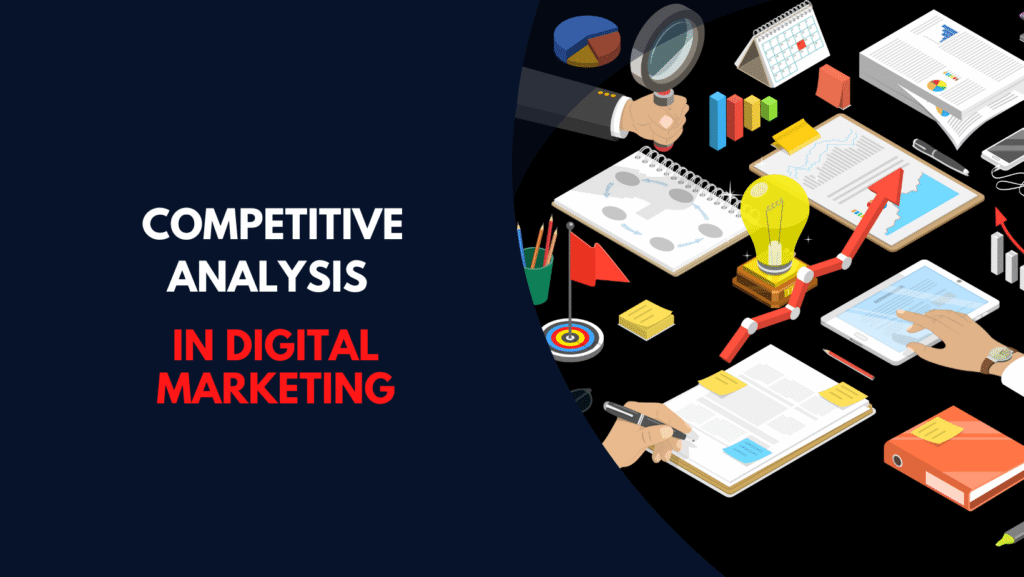
Competitor Analysis How to Conduct an Effective Digital Marketing Competitor Analysis Staying ahead of the competition is a very effective method to expand your business. It entails understanding your competitors’ operations in order to develop strategies to outperform them in terms of consumer engagement and impact. A digital competitive analysis is an essential component of any digital marketing plan. It assists you in understanding your competitors’ digital strategy, allowing you to capitalize on your strengths while minimizing your flaws in order to create and grow. Plus, you don’t need pricey third-party assistance; if you know how, you can handle it all in-house. With the ever-evolving world of AI technologies for digital marketing, you can make the process even more efficient. Conducting a competition analysis entails studying your market to discover competitors, deconstructing the characteristics of competitors’ firms, and analyzing their strategy. A competitor study is often used to identify the strengths and weaknesses of other market players, define your company’s position in comparison to them, and identify gaps and estimate your ability to fill them. Because of the dynamic nature of the online landscape, competitor analysis in digital marketing has certain distinct aspects. Digital marketplaces evolve quickly, and technology enables organizations operating in the digital realm to shift instantly. However, unlike traditional marketing methods, digital platforms provide a wealth of data and metrics that may be used to acquire insights into competition plans. In today’s ever-changing digital landscape, staying ahead of the curve is more than just a catchphrase; it’s a survival strategy. And one of the most efficient ways to ensure you’re on the right track is to research your competitors. And do you go beyond just “keeping an eye on them” to do a thorough, proactive digital marketing competitor analysis? Don’t worry, fellow marketers! This guide will empower you with the information and techniques needed to deconstruct your competitors, find important insights, and finally, Step 1: Define your competitive landscape. Top Digital Marketing Agency In Hyderabad Begin by painting a wide picture of your playing ground. Identify your immediate competitors, who provide identical items or services to the same target demographic. Don’t forget about indirect competitors, who may provide different solutions yet address the same client pain areas. Consider including rising players in your business, since they may predict future trends. Step 2: Choose your analysis framework. Once you know who you’re up against, select a framework to guide your investigation. Popular choices include: *SWOT Analysis: This traditional tool allows you to evaluate your competitor’s strengths, weaknesses, opportunities, and threats. *Porter’s Five Forces Model: This framework examines the competitive forces in your sector (companies, new entrants, substitutes, purchasers, and suppliers). *Digital Marketing Audit: This strategy entails a thorough examination of various digital marketing channels such as SEO, social media, and content marketing. Step 3: Gather your data. Arsenal Now comes the fun part (well, the majority of it): data collection! Use a combination of free and paid solutions to collect insights across several channels: *Website Traffic and Engagement: Tools such as Similarweb and Semrush show website traffic volume, source, and engagement analytics. *SEO: Use tools such as Ahrefs and Moz to assess your competitors’ keyword rankings, backlinks, and on-page optimisation. *Social Media Presence: Using services like Facebook Insights and Brand24, monitor follower growth, engagement rates, and content themes. *Paid Advertising: Tools like SpyFu and SEMrush can reveal competition ad keywords, budgets, and landing sites. *Content Marketing: Use tools like Buzzsumo and BuzzSumo to analyse competition content themes, formats, and audience engagement. *Email Marketing: Use tools like Litmus and Email on Acid to track competitors’ email frequency, subject lines, and content. Step 4: Analyse and interpret. Top Digital Marketing Agency In Hyderabad Don’t only collect data, interpret it! Look for patterns, trends, and distinctive strategies used by your competition. Identify their strengths and flaws in comparison to your own offers. Pay close attention to areas where they outperform you and where you have a possible advantage. Step 5: Obtain Actionable Insights: The real magic emerges when you turn ideas into actionable steps. Apply your findings to: *Refine your value proposition: Explain what sets you apart from the competition and why buyers should choose you. *Optimise your digital marketing strategy. Identify gaps or places for development in your SEO, social media, content marketing, and paid advertising strategies. *Inform your content production. Analyse which material resonates with your target audience and tailor your own strategy accordingly. *Create distinct selling points. To distinguish out in the market, focus on your strengths while addressing competition flaws. Step 6: Continuous monitoring and iteration: Remember that the digital scene changes constantly. Set up mechanisms to continuously monitor your competitors’ activities and update your analysis. This enables you to spot developing trends, adapt to their tactics, and stay ahead of the competition. Bonus Tips: *Look beyond the large players: Smaller, niche competitors can occasionally provide significant insights and novel ways. *Don’t just imitate, but inspire: Use competition analysis to spark your own new ideas and generate distinctive solutions. *Focus on data, not opinion: When conducting analysis, use concrete data and observations rather than preconceptions or prejudices. Additionally, ethics should be considered. Avoid unethical behaviour, such as obtaining competitor data or using hostile strategies. By taking these steps and adding the extra tips, you’ll be well on your way to completing a thorough and actionable digital marketing competitor study. Remember that the insights you obtain can be the key to discovering new opportunities, outwitting your competitors, and, ultimately, attaining your digital marketing objectives. So, start exploring, examine carefully, and prepare to witness your brand climb above the competition! To increase exposure, leads, and revenue, integrate digital methods into your organisation. DMI’s Digital Strategy course will teach you how to understand your customer and brand story, improve your financial and team management skills, optimise your digital channels, and become a digital leader. Top Digital Marketing Agency In Hyderabad To summaries, rival marketing is critical for your marketing plan, therefore perform your homework thoroughly. After all, conducting a
How Effectivley chatgpt help in digital marketing
How effectively ChatGPT help in digital marketing ChatGPT: Superpower or Hype? How Effective Can It Be for Your Digital Marketing? ChatGPT, the AI chatbot sweeping the internet by storm, has attracted interest and debate, particularly in the field of digital marketing. In the ever-changing field of digital marketing, technological innovations continue to influence how businesses communicate with their clients. ChatGPT is one such breakthrough that has recently received a lot of attention. ChatGPT is expected to make a huge impact on the digital marketing scene. Its capacity to improve consumer engagement, personalise conversations, streamline support, give data-driven insights, and supplement content development makes it a powerful tool for marketers. By using ChatGPT, organisations can stay ahead of the competition, provide excellent customer experiences, and promote long-term digital success. If you are unfamiliar with ChatGPT, you must be living under a rock. The OpenAI AI chatbot, ChatGPT, has taken the world by storm, and its popularity grows dramatically with each passing day. The chatbot has made headlines for its alarmingly precise responses, which can easily rival with how a human would answer a specific topic. Generative Artificial Intelligence (AI) in general is a phenomenal technological advancement that has produced substantial commotion in a variety of industries. When it comes to ChatGPT, many experts believe that its impact on digital marketing will spark a new revolution. Many people have differing opinions about ChatGPT, with some believing that it will transform the industry by increasing the efficiency of digital marketing, while others believe it is overrated. ChatGPT is a huge language model trained on a massive dataset of textual data. It has been trained on text-based material such as articles, blogs, social media posts, and even books to understand the structure and pattern of the human psyche and provide human-like responses. ChatGPT sprang to prominence due to its capacity to give dynamic and rich human-like responses, which set it apart from competing chatbots. This is achievable because of Generative Pretrained Transformer 03 (GPT-3), a powerful model trained by OpenAI. Let’s look at the potential benefits and limitations of ChatGPT in the field of digital marketing. Benefits: *Content Creation Powerhouse: ChatGPT’s capacity to generate a variety of creative text formats, including blog articles and social media captions, can considerably improve content creation efficiency. Consider creating customised product descriptions, interesting ad text, or even initial drafts for blog entries while saving time and resources. *Personalised Touch: ChatGPT’s capacity to understand and respond to instructions allows it to tailor content on a large scale. Consider designing personalised email marketing campaigns based on individual consumer preferences, or crafting social media messaging that resonate with distinct audience segments. This personalised strategy can increase engagement and conversion rates. *SEO Optimisation: Optimising material for search engines is critical for increasing online presence. ChatGPT can aid with keyword research, recommend suitable titles and meta descriptions, and even generate search engine-optimised content to help you climb the rankings. *24/7 Customer Service: Consider automated chatbots powered by ChatGPT that provide instant service to your customers around the clock. This can increase customer happiness, lower website bounce rates, and answer simple questions, freeing up your human workforce to handle more difficult issues. *Market Research Insights: Using ChatGPT, analyze customer reviews, social media conversations, and website feedback to spot trends, discover customer problem points, and acquire useful insights to inform your marketing strategy. Limitations: *Accuracy and Quality: Although ChatGPT can generate human-like text, it is not failsafe. Ensuring factual correctness, preventing plagiarism, and keeping brand voice necessitates human supervision and editing. Don’t expect it to generate flawless material every time. *Creativity and Originality: ChatGPT is good at mimicking established styles and developing variations, but truly creative breakthroughs may still require human intelligence. Don’t rely only on it for ground-breaking ideas or distinctive brand storytelling. *Ethical Considerations: The use of AI-generated content without sufficient disclosure creates ethical concerns. Transparency and ethical use are critical for preserving audience trust and avoiding unwanted backlash. *Limited Data and Bias: ChatGPT’s results are based on the data on which it was trained. Biases in that data can be reflected in its reactions, necessitating careful monitoring and possible mitigating techniques. Effective implementation: *Start small and experiment. Don’t take the plunge headfirst. Begin with specific tasks, such as creating early text drafts, product descriptions, or social media captions. Evaluate the outcomes and make improvements to your method. * Concentrate on human-in-the-loop: Remember that ChatGPT is a tool, not a substitute for human competence. Use it to supplement rather than replace your existing work. Maintain editorial control, fact-check outputs, and add a personal touch for authenticity. *Data quality is critical: Ensure that you feed ChatGPT high-quality, relevant data that is consistent with your brand language and target audience. This will have a substantial impact on the quality and efficiency of its outputs. *Transparency and disclosure: Be clear about using AI-generated content. Transparency fosters trust and mitigates ethical risks. Consider incorporating AI’s involvement in content generation into your brand standards. *Combine with other tools. Use ChatGPT in conjunction with your existing marketing tools for SEO optimisation, social media scheduling, analytics, and more. Create a streamlined workflow to enhance efficiency and effect. Conclusion: While ChatGPT is not a cure-all, it does open up new opportunities for digital marketing. You may harness its power to increase content production, personalize experiences, and get useful insights by recognizing its strengths and limitations, applying it intelligently, and keeping a human-centric approach. Remember that AI is a tool that should be used responsibly, ethically, and in conjunction with your existing marketing knowledge. So, experiment, investigate, and discover how ChatGPT may bring a significant new dimension to your digital marketing activities. ChatGPT has provided new opportunities for business owners, particularly those related to branding and customer service. It has some wonderful characteristics that help businesses develop. However, as with anything else, ChatGPT has limitations that should be addressed. As more individuals interact with this chatbot, we will identify new concerns that need to be addressed. ChatGPT may be incredibly useful
How social media marketing makes a significant impact in digital marketing

Social media impact The Social Butterfly Effect: How Social Media Marketing Influences Digital Success. In the bustling beehive of digital marketing, social media is no longer merely a medium for cat videos and hilarious memes. It’s a strong tool that has the ability to significantly increase your brand’s reach, engagement, and, eventually, bottom line. At the convergence of technology and marketing, social media has emerged as a strong tool for businesses to promote their products and engage with their target audiences. With its extensive use and ever-changing features, social media has had a tremendous impact on digital marketing methods. It’s no surprise that social media has transformed corporate operations, consumer relationships, and product or service advertising in the digital age. Almost everyone is on it! Platforms such as Facebook, X (previously Twitter), Instagram, LinkedIn, and others in the social media arena have evolved into critical tools for branding and marketing. Businesses are now using social media marketing (SMM) to engage with their target audience, develop brand awareness, increase website traffic, and increase sales because it is just unavoidable in today’s world. Buckle up, marketers, as we delve into the “buzzworthy” benefits of social media and their impact on your digital success: Top Digital Marketing Agency In Hyderabad 1. Increasing Brand Awareness: Consider your brand name resonating throughout a crowded marketplace. Social media networks serve as virtual town squares, filled with potential clients. By actively participating, developing shareable content, and launching focused ads, you may dramatically increase brand recognition. Suddenly, your brand is more than simply a name on a product; it is a personality, a voice, and a reliable source of information in your target audience’s social networks. 2. Developing Relationships and Trust: One-way communication is no longer the norm. Social media encourages two-way communication, allowing you to form true connections with your audience. Respond to comments, ask questions, and participate in conversations; you’re not just broadcasting; you’re part of a vibrant community. This human touch fosters trust and commitment, transforming ephemeral online contacts into devoted brand evangelists. 3. Engage Your Audience: Social media lives on engagement. Interactive content, polls, quizzes, and even live streaming inspire heated debates and urge your target audience to actively engage with your business. This dynamic involvement goes beyond passive reception, resulting in a strong connection that creates a lasting impact. 4. More Targeted Advertising Than Ever Before: The days of spraying ad dollars all over the internet in the hopes that anything would stick are over. Social media platforms provide advanced targeting capabilities, allowing you to reach your desired audience with pinpoint accuracy. Demographic information, interests, and even online conduct may be used to offer highly relevant adverts, increasing your return on investment and ensuring your message reaches the appropriate people. 5. Content Marketing Powerhouse: Social media is more than simply a promotional platform; it also serves as a hub for content marketing. Share blog pieces, infographics, videos, and even behind-the-scenes looks to educate, entertain, and inspire your target audience. This great content establishes you as a thought leader in your area, attracting new followers while keeping current ones engaged. 6. Customer Service with a Human Touch Social media provides an opportunity to rethink customer service. Respond to complaints as soon as possible, address inquiries in public, and demonstrate your dedication to effective problem solutions. This transparency and responsiveness fosters trust and positive word-of-mouth, transforming consumer interactions into opportunities for brand support. 7. A treasure trove of insights: Social media chats are a goldmine for customer insights. Use social listening technologies to identify trends, sentiments, and brand mentions. Learn what your target audience likes, dislikes, and wants – this is vital knowledge that can help you with product creation, marketing initiatives, and overall brand direction. 8. Community Building with Your Loyal Tribe: Social media allows you to build a strong group of brand enthusiasts. Organise contests, polls, and encourage user-generated material. This sense of connection creates loyalty and converts one-time customers into ardent advocates who naturally promote your brand, increasing its reach and effect. 9. Human Connection: In a world inundated with digital noise, social media helps you to humanise your brand. Share staff experiences, emphasise business principles, and introduce the people behind your products. This personal connection connects with your target audience on a deeper level, building trust and emotional engagement that traditional marketing approaches frequently lack. 10. Measurement Made Easy: Top Digital Marketing Agency In Hyderabad Unlike traditional marketing techniques, social media produces demonstrable effects. Track engagement data, reach, website traffic, and even conversions to better understand the effectiveness of your initiatives. This data-driven strategy helps you to fine-tune your plans, enhance your content, and maximise your return on investment. Social media marketing is not a passing trend; it is a strategic necessity in today’s digital economy. You may unleash its enormous potential to increase brand awareness, develop meaningful relationships, and eventually achieve your digital marketing goals by utilising its numerous functions, fostering genuine connections, and providing compelling content. Step into the busy social environment, interact with your audience, and watch your brand take off! Social media marketing has altered the way businesses communicate with their customers and build their brands. When executed well, it can deliver major benefits such as increased customer interaction, brand exposure, and cost-effective advertising. However, businesses must be aware of the potential downsides, such as negative feedback and data privacy concerns. However, by studying successful organisations like Wendy’s, Airbnb, and Nike, you may have a better understanding of how to approach your social media marketing plan and how to use the power of relationships. Social media marketing offers new opportunities to communicate with customers, connect with a global audience, and establish a loyal following. Beyond brand recognition and reach, social media marketing has a tremendous impact on customer relationships, revenue, and overall business performance. If businesses want to remain relevant in the digital age, they must harness the power of social media marketing and adapt their strategies to keep ahead of a constantly changing market. Top
Effective digital marketing strategies
Effective digital marketing strategies: Successful Marketing Strategies for 2024 and Beyond. A digital marketing strategy is a plan that involves leveraging many channels to increase your online exposure. It should consider your target audience, strengths, shortcomings, and competitors. To develop an effective strategy, leverage data from across the business to inform and hypothesise. This can help you determine which marketing channels to employ or test, your target demographic, and how to deliver your message or brand. Marketers trying to develop the best digital marketing strategy must first understand their business, product, and demographics before selecting one that will work for them. A digital marketing strategy is a plan for your company’s Internet presence through multiple online channels, with the goal of reaching and converting your target audience. An effective digital marketing strategy accelerates business growth by increasing and reinforcing client engagement in the most competitive online arenas. However, each technique has distinct advantages, limitations, and return on investment. Advertising on the Internet is no easy accomplishment. If you doubt this, ask many small business owners who have abandoned the notion since they were losing money while receiving no results from their online marketing. However, there are many other Digital Marketing Agencies in Hyderabad but SB Wayout is the Best Digital Marketing company in Hyderabad for small businesses and ecommerce stores who are secretly profiting from their digital marketing efforts. Many firms that have had substantial success with online marketing campaigns did so because they discovered the most effective digital marketing tactics, studied everything they could about them, utilized them, and refused to let up until they achieved success. 1. Embrace the Privacy-First Future. Third-party cookies are becoming obsolete, and rules such as GDPR and CCPA are putting privacy first. Do not panic! Adapt with: *Prioritising first-party data: To increase trust and transparency, collect opt-in data via forms, loyalty programmes, and compelling content. *Using zero-party data: Allow consumers to contribute information they are comfortable with while providing value in exchange. *Embracing contextual targeting and AI: Use AI-powered solutions to personalise campaigns without resorting to invasive techniques. 2. Content: From King to Experience Architect. Content is still important, but the game has shifted. Move beyond simply pushing information and instead focus on: *Create immersive experiences by incorporating interactive features, storytelling, and customised content journeys to attract attention. *Embracing short-form video: Make the most of the TikTok and Reels explosion by creating interesting, snackable content. *Prioritising quality above quantity: Create valuable, relevant material that resonates with your target audience. 3. Sustainability, from buzzword to brand ethos: Consumers seek authenticity and social responsibility. Integrate sustainability in your marketing by: Best Digital Marketing agency in Hyderabad. *Promoting eco-friendly techniques and ethical sourcing. *Collaborating with green influencers and institutions. *Provide transparent and data-driven reporting on your sustainability activities. 4. Community Building: Moving From Followers to Brand Advocates: Develop true connections by: *Setting up online forums and conducting interactive events. *Empowering brand advocates and promoting user-generated content. *Use social listening technologies to better understand your target audience. *Responding to comments and criticism in real time. 5. AI: From Science Fiction to Marketing Reality. Artificial intelligence is no longer a novelty; it is a strong weapon. Leverage it for: *Create and personalise content. *Optimise campaigns and analyse statistics. *Predicting client behaviour and finding trends.Remember that AI is a tool, not a substitute for human creativity and understanding. 6. The Omnichannel Journey: Seamless Storytelling Customers can smoothly navigate numerous channels. Create a consistent experience by: *Personalised messages across all touchpoints. *Smooth transitions between online and offline engagements. *Investing in marketing automation solutions to improve communication. 7. Voice Search: Whispering to Assistants: Voice search is booming. Optimise using: *Utilising natural language and long-tail keywords. *Developing compelling voice skills for smart speakers. *Understanding conversational exchanges and providing useful information. 8. Influencer Marketing: Mega to Micro: Focus on micro-influencers and brand champions who have engaged niche audiences. Prioritise: *Authenticity and engagement trump vanity metrics. *Use influencer marketing platforms for finding and tracking. *Collaborating with influencers who share your brand’s values and message. 9. Live Streaming: The Show Must Continue (Live): Live Streaming provides unique engagement options. Use it for: *Offering Q&A sessions, backstage visits, and product demonstrations. *Encourage audience engagement and reply to comments in real time. *Use live streaming metrics to optimise your plan. 10. Measurement: Beyond Vanity Metrics. Move beyond likes and shares. Focus on knowing what motivates: * Analyse engagement and conversions using attribution models. * Identify campaign strengths and weaknesses with advanced analytics tools. *Continuous A/B testing to optimise efforts and maximise ROI. Remember that these are not stand-alone methods; they work best together. Bonus Tip: Be curious! Experiment, keep learning, and adapt to the always changing digital scene. Remember, your audience is at the centre of it all. Understand their needs, desires, and pain spots, and build marketing that speaks to them on a personal level. With these tactics, you’ll be able to confidently navigate the digital jungle and build successful campaigns. Best Digital Marketing Agency in Hyderabad, digital marketing is one of the most effective strategies that businesses can use to attract attention and sell their products and services. Several digital marketing approaches, such as social media marketing, email marketing, SEO, PPC advertising, and content marketing, have excellent ROI potential. The beauty of most platforms is that you can set a budget and immediately view the results. This means that businesses of all sizes may profit, and you can experiment with graphics, content, and CTAs to see what works best for your target audience. You may also use data from paid marketing efforts to inform your marketing strategies. For example, suppose you built a Facebook ad to promote a podcast that generates a lot of visitors. Consider reusing the content to create a blog or downloadable checklist, as the issue is definitely of relevance to your audience.